
The Short Answer
Most loud garage door openers can be quieted with three cheap fixes: tightening loose hardware, lubricating the moving metal parts, and adding rubber isolators where the opener bolts to the ceiling. If you've done all three and you're still hearing grinding, screeching, or a hard bang at the top or bottom of travel, the noise is usually coming from worn rollers, a stretched chain, or an aging chain-drive opener that's simply at the end of its useful life. That's when a belt-drive swap becomes the real fix instead of a band-aid.
Here's how to work through it in order, cheapest and easiest first.
Tools You'll Need
- Socket wrench or ratchet set
- Silicone-based garage door lubricant (not WD-40, not grease)
- Rubber isolation washers or a foam opener-mount kit
- Flashlight
- Step ladder
- Rag or shop towel
Step-by-Step: Quieting the Noise
- Tighten every bolt and bracket. Afternoon downpours and humidity swings make metal expand and contract, and that constant movement works bolts loose over months. Walk the track and the opener rail with a ratchet, snugging every nut, hinge bolt, and mounting bracket. This alone solves a surprising amount of rattling.
- Lubricate hinges, rollers, and springs. Use a silicone-based spray, not WD-40 (it attracts dust and grit) and not grease (it gums up in heat and humidity). Hit every hinge pivot point, the roller stems, and the springs. Wipe off excess so it doesn't drip on the floor.
- Add rubber isolators between the opener and the ceiling. A chain-drive opener bolted directly to ceiling joists transmits every vibration into the house. Rubber isolation washers (sold at most hardware stores) cost a few dollars and cut vibration noise noticeably. This is a 15-minute job with a ladder and a wrench.
- Inspect the rollers. Shine a flashlight on each roller as the door moves. Steel rollers are loud by nature and wear down faster near the coast, where salt air speeds up corrosion. If you see flat spots, rust pitting, or a roller that wobbles in its track, that's your noise source. Nylon rollers run quieter and hold up better against salt air, but swapping a full set of rollers involves disconnecting the door from spring tension — that's a technician job, not a DIY one.
- Check chain or belt tension. A chain-drive opener with a sagging chain will slap against the rail with every open and close. Most openers have a tensioning bolt near the motor head; consult your owner's manual before adjusting, since over-tightening strains the motor.
- Listen for the bang at the top or bottom. A loud thud when the door fully opens or closes often means the travel limits are set wrong, making the door slam into the frame. This is adjustable on most openers through the control panel, but if adjusting it doesn't help, something mechanical is binding.
- If it's still loud, consider a belt-drive swap. Chain-drive openers are inherently noisier because metal is dragging metal. A belt-drive opener uses a reinforced rubber belt instead of a chain, cutting opener noise dramatically. If your current opener is older than 10-12 years, this is often more cost-effective than keep patching a tired chain-drive unit.
What You Can Do vs. What Needs a Technician
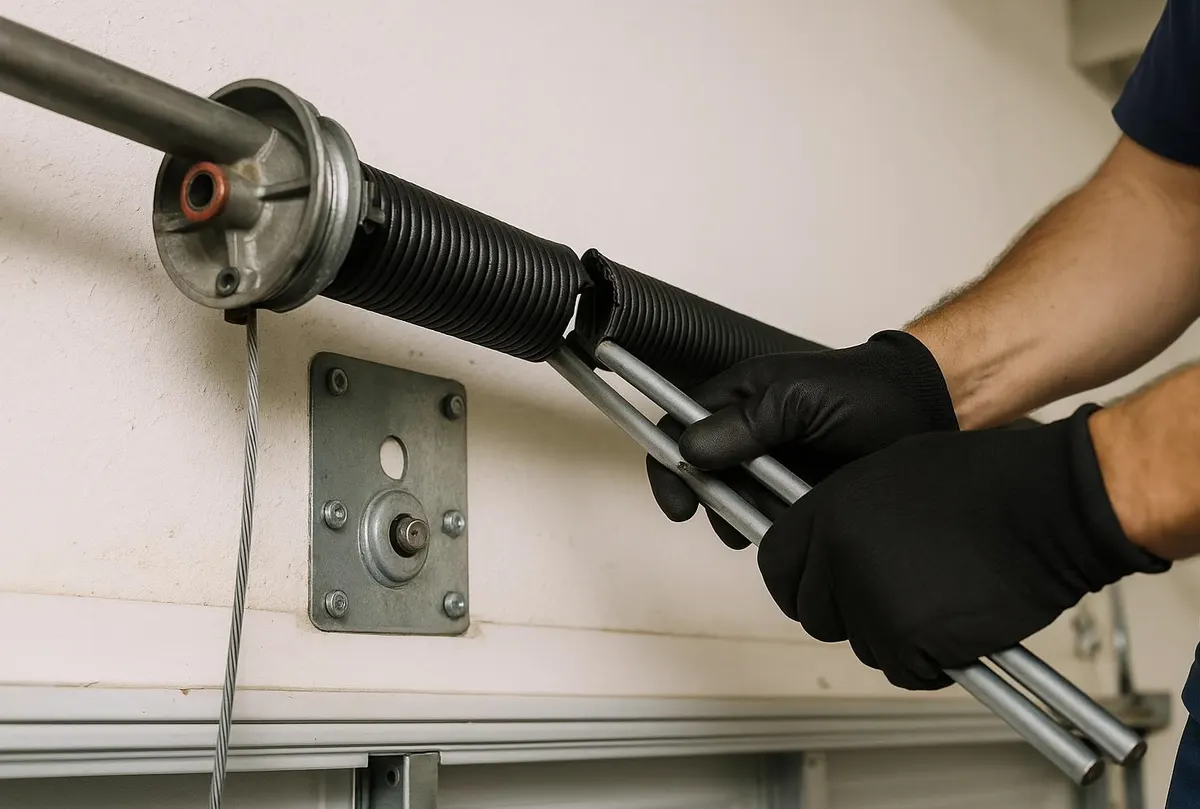
Tightening hardware, lubricating hinges and rollers, and adding isolation washers are all safe, straightforward homeowner tasks. Replacing rollers, re-tensioning a chain past basic adjustment, or diagnosing a binding track all involve working near a door under spring tension — garage door springs store enough force to cause serious injury, and that's not a DIY repair. Likewise, installing a belt-drive opener means running new wiring, programming safety sensors, and setting travel limits correctly, which is worth having done right the first time.
When to Call Mexico Beach Garage Door Service
If you've tightened, lubricated, and isolated everything and the door still sounds like it's grinding gravel, give us a call. We'll check your rollers, cables, and track alignment as part of a Garage Door Maintenance & Tune-Up, and if your opener is simply worn out, we handle full Garage Door Opener Installation with belt-drive units built to hold up to coastal humidity and salt air. We also inspect hardware for wind-load compliance while we're there, since a loose or corroded bracket is a bigger problem than noise once storm season winds pick up.
Tired of a garage door that announces itself every time you pull in? Call Mexico Beach Garage Door Service today and let a local technician quiet it down for good.