
The Cost of Waiting Another Season
A garage door that won't close, or closes a few inches and then jerks back open, isn't a quirky glitch to live with. It's a door that's failing one of its basic jobs: sealing your garage against weather and keeping your home secure. Leave it through another round of afternoon downpours and you're inviting water, humidity, and salt air straight into a space that's probably storing tools, a second fridge, or a vehicle. Leave it open overnight because you gave up fighting it, and you've got an unsecured entry point into your house. And if the root cause is mechanical, wear doesn't pause while you wait. A worn roller or a fraying cable that's causing today's reversal can turn into a jammed door or a snapped spring by next season, and that's a repair that costs more and carries real injury risk if it lets go while someone's nearby.
Symptoms Worth Paying Attention To
- Door starts closing, stops, and reverses back up every time
- Door won't begin closing at all when you press the remote or wall button
- Reversal happens only at a certain point in the travel, not randomly
- You hear a clunk, grind, or scrape right before it reverses
- The door closes fine some days and not others, especially after rain
What a Technician Checks First: The Safety Sensors
Every modern opener has two photo-eye sensors near the bottom of the tracks that shoot an invisible beam across the doorway. If anything breaks that beam, or if the sensors are misaligned, dirty, or corroded, the opener assumes something's in the way and reverses the door as a safety measure. This is the single most common cause of a door that closes partway and pops back open, and it's the first thing worth ruling out.
The fix: wipe the sensor lenses clean, check that both sensor lights are solid and not blinking, and make sure nothing (a storage bin, a stray leaf blower cord, spiderwebs) is in the beam's path. Salt air and humidity near the coast speed up corrosion on the sensor wiring and connectors, so if the lights flicker or won't stay lit, the wiring itself may need to be reseated or replaced.
Next: Obstructions and Track Alignment
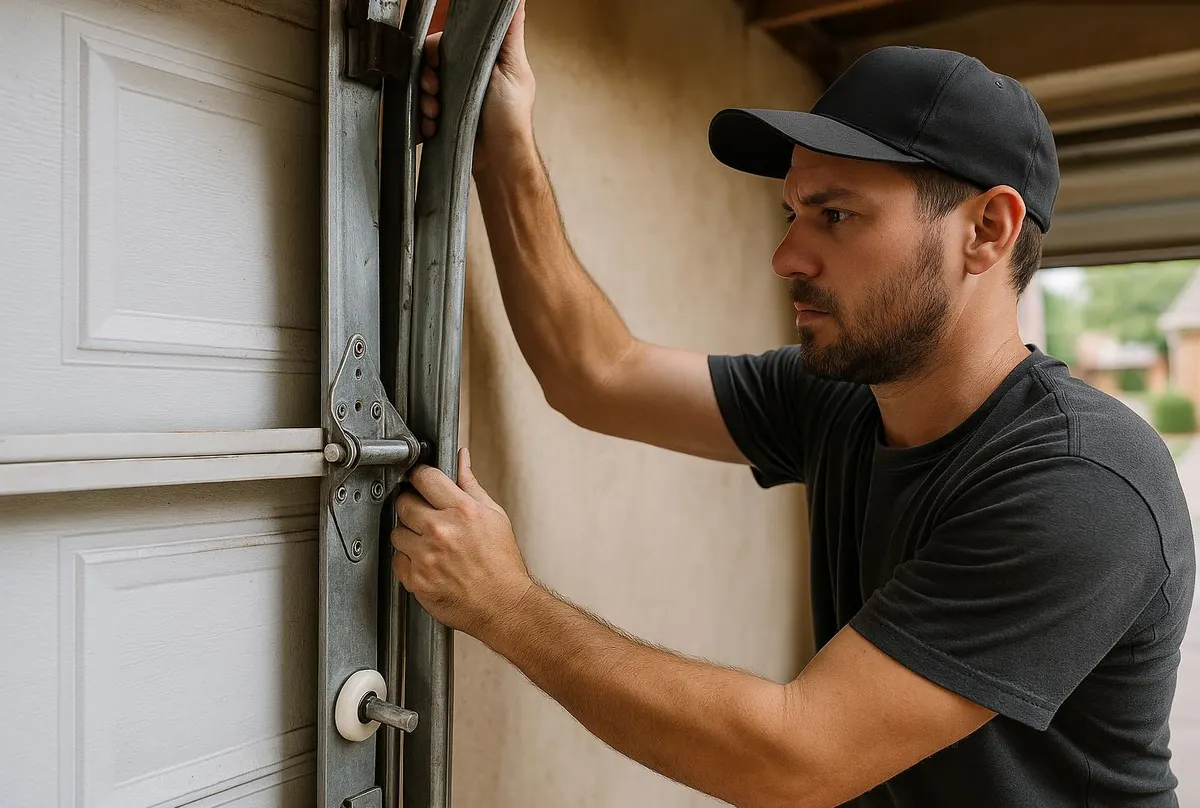
If the sensors check out, the next step is physically inspecting the tracks for debris, dents, or misalignment. Storm season can shift fencing, leave branches wedged near the rails, or warp a track if something struck it during high winds. A track that's even slightly bent will cause the rollers to bind at the same spot every time, which looks exactly like a safety reversal but is actually mechanical resistance. Humidity swelling on wood door frames can also push a track out of true alignment, especially on older installations.
The fix here ranges from clearing debris and re-securing a loose track bracket, to straightening or replacing a bent section of track entirely.
Then: Springs, Cables, and Rollers
If the door won't close at all, or closes unevenly with one side dragging, the issue often sits with the springs or cables. A spring that's lost tension can't properly counterbalance the door's weight, so the opener strains and the safety system kicks in to stop it rather than risk a hard drop. Frayed or slipped cables cause similar uneven movement, and worn rollers, especially ones that have never been lubricated and are now fighting rust from the salt air, add drag that the opener interprets as an obstruction.
These are tension-loaded parts. Spring replacement and cable repair both involve releasing stored tension safely, which is not a DIY task worth the risk to fingers or eyesight.
Last: Opener Settings and the Logic Board
If everything mechanical checks out, the opener's travel limits or force settings may simply be out of calibration, especially after a power surge from storm activity. Occasionally the logic board itself is failing, which shows up as inconsistent behavior that doesn't track with the other causes.
When to Call Mexico Beach Garage Door Service
If you've wiped the sensors and cleared the tracks and the door still won't cooperate, it's time to bring in a technician before the problem escalates into a stuck-open door during the next storm. Our Off Track Door Repair and Garage Door Cable & Roller Repair services cover the mechanical causes above, and we'll diagnose which one is actually at play rather than guessing. We also handle spring tension safely with the right tools, so you're not left with a door that's one wrong move from a serious injury.
If your garage door in Mexico Beach, FL is closing then reversing, or won't close at all, give Mexico Beach Garage Door Service a call. We'll get it diagnosed and fixed before it turns into a bigger problem.